🪧 ONLINE BANKING Online banking, also known as internet banking, virtual banking, web banking or home banking, is a system that enables customers of a bank or other financial institution to conduct a range of financial transactions through the financial institution's website or mobile app. Internet banking allows a user to conduct financial transactions via the Internet. Internet banking is also known as online banking or web banking. Internet banking offers customers almost every service traditionally available through a local branch including deposits, transfers, and online bill payments. Virtually every banking institution has some form of online banking, available both on desktop versions and through mobile apps. With online banking, consumers aren't required to visit a bank branch to complete most of their basic banking transactions. They can do all of this at their own convenience, wherever they want i.e at home, at work, or on the w...
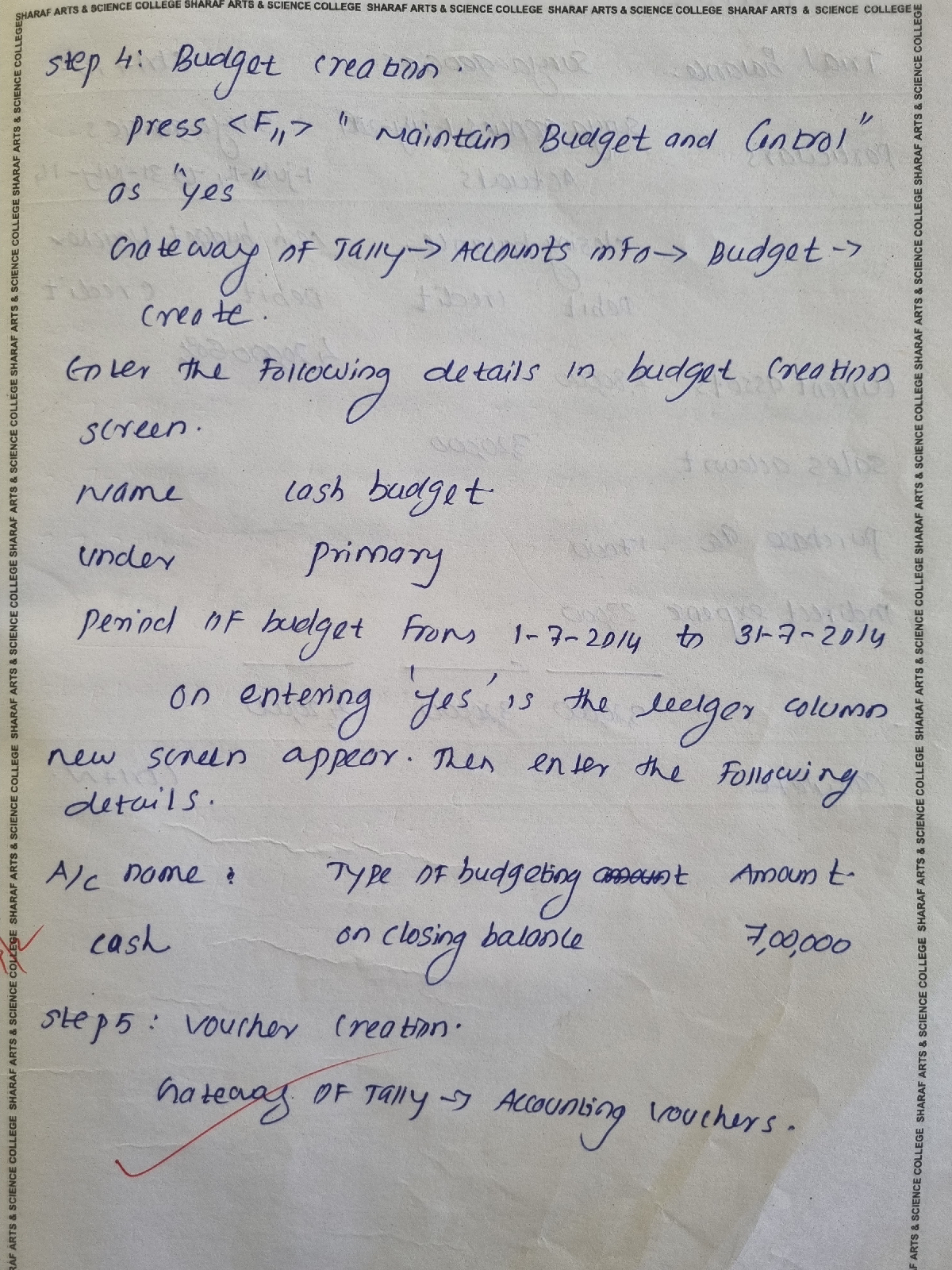
🔽Bank reconciliation🔽 Bank reconciliation explains the difference between the bank balance shown in an organization's bank statement and the corresponding amount shown in the organization's accounting records, on a particular date. To reconcile the bank statement Go to 'Gateway of Tally > Banking > Bank Reconciliation' Select the name of the required bank The 'Bank Reconciliation' screen appears: Match every transaction with the bank statement and record the transaction date in the 'Bank Date' field. Accept the screen to reconcile the bank ledgers as per the corresponding banking statement. 🔽TRAIL BALANCE 🔽PROFIT AND LOSS ACCOUNT BALANCE SHEET 🔽COST CATEGORY IN TALLY
COMPUTERISED ACCOUNTING Computerized accounting is the use of accounting software to record, store, and process financial transactions electronically, replacing manual methods like ledgers . This system automates tasks like invoicing and payroll, leading to increased accuracy, efficiency, and faster reporting. 🔽ADVANTAGES 🔽 1.Speed and efficiency: Tasks like data entry, calculations, and report generation are much faster, saving significant time compared to manual methods. 2.Accuracy: Automation reduces human error from manual calculations and data entry, leading to more reliable financial records. 3.Real-time data: Financial information is updated immediately, providing up-to-date insights for better and more timely decision-making. 4.Automated reporting: Generating financial statements like profit and loss accounts and balance sheets becomes an instant process. 5.Reduced paperwork and storage: Storing records el...
Comments
Post a Comment